

If you’ve just been diagnosed with glaucoma, you might be wondering when the treatment ends. Here’s the honest answer: it doesn’t, not in the way a course of antibiotics does. Glaucoma is a lifelong condition, and managing it well means building an ongoing relationship with your eye doctor rather than checking a box after one visit or one procedure.
That can feel like a lot to take in. However, once you understand why regular exams matter and what determines how often you’ll need them, your eye doctor’s recommended schedule makes a lot more sense. Keep reading to learn more about how often you should attend eye exams if you have glaucoma.
Why Glaucoma Can’t Be Treated and Forgotten

Glaucoma develops when the optic nerve, the bundle of fibers that carries visual information from your eye to your brain, becomes damaged over time. In most cases, this happens because pressure inside the eye exceeds what the nerve can safely handle.
Once that damage occurs, it’s permanent. There’s no procedure that restores vision already lost to glaucoma.
What you can do is stop further damage. Your eye doctor will typically set a target eye pressure to protect the vision you have left, and treatment may involve eye drops, laser procedures, or surgery to lower pressure and keep it there. Hayden Vision offers a full range of glaucoma treatment options, from medication to newer approaches like SLT and iStent, depending on what your eyes need.
Here’s the catch: eye pressure isn’t static. It can shift over months or years, medications can lose their effectiveness, and the target pressure that worked for you last year might need adjusting this year. That’s why ongoing monitoring isn’t optional. It’s how your doctor catches those shifts before they cost you more vision.
How Often Should You See Your Eye Doctor?
No single answer applies to every patient, and that’s by design. Glaucoma is often symptom-free until the disease is fairly advanced, which is exactly why the exam schedule your eye doctor sets matters so much. You won’t necessarily feel your eye pressure creeping up or notice subtle changes to your peripheral vision on your own.
Generally speaking, if you’re considered at risk for glaucoma (sometimes called a glaucoma suspect) or your disease is mild and well controlled, once-a-year visits may be enough. If your glaucoma is more advanced, your eye pressure runs high, or your eye doctor has seen signs the disease is progressing, you’ll likely need to come in more often, sometimes every few months. Your specific interval depends on how your glaucoma has progressed so far and how confident your eye doctor is that things are stable.
The Three Tests That Drive That Schedule
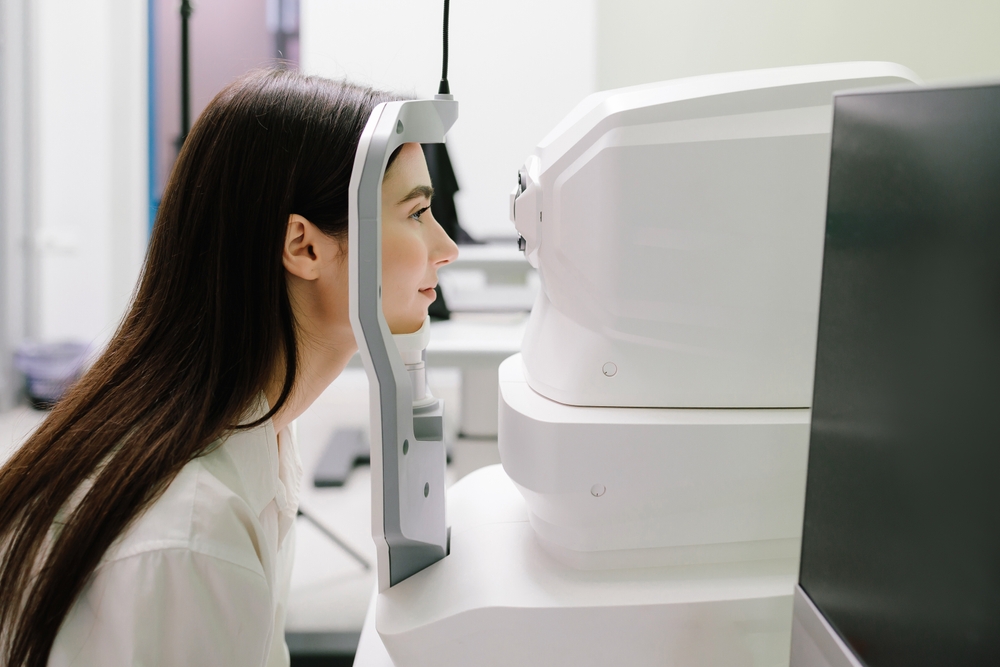
Three tests do most of the heavy lifting in tracking glaucoma, and all three are part of Hayden Vision’s comprehensive eye exams.
The first is a visual field test, which maps out how much of your surrounding vision you can actually detect. It’s not the most exciting test you’ll take, and some patients find it a little tedious, but it’s one of the most reliable ways to tell whether glaucoma is stable or advancing, since it catches peripheral vision loss long before you’d notice it in daily life.
The second is an optic nerve scan, often done using OCT (optical coherence tomography) imaging. This measures the thickness of the nerve fiber layer at the back of your eye, giving your doctor a detailed picture of the optic nerve’s health and any thinning over time. Comparing scans from one visit to the next is often how early signs of progression are detected.
The third is tonometry, which measures the pressure inside your eye. Elevated eye pressure is one of the biggest risk factors for glaucoma, and it’s the one your eye doctor can actively treat, so regular checks show whether your eye drops or other treatments are keeping pressure in a safe range.
The test is quick and painless. Depending on the method, it may involve a gentle puff of air or a brief touch to the eye’s surface after numbing drops.
For most patients with early, stable glaucoma, these tests are usually done about once a year. If results are inconsistent, hard to interpret, or suggest the disease might be worsening, your eye doctor will likely want to repeat them more frequently to get a clearer picture.
When You’ll Need to Come In More Often
A few situations tend to shorten the time between visits. If your visual field, tonometry, or OCT results come back unclear or inconsistent from one test to the next, your doctor will want to retest sooner rather than wait a full year to see if a trend holds. The same goes if there’s any concern that your glaucoma might be progressing faster than expected, or if a medication change means your doctor needs to confirm your new eye pressure target is actually working.
This differs from guidance on how often you should be screened if you don’t yet have a diagnosis. Once glaucoma is confirmed, the conversation shifts from screening to active management, which usually means a tighter, more personalized schedule than a general screening interval.
Your Care Team at Hayden Vision

Managing glaucoma well over the long term means having a doctor who knows your history and can spot patterns others might miss. Hayden Vision’s eye doctors work with patients across Evansville, Henderson, and Princeton to build treatment and monitoring plans suited to each person’s stage of disease, rather than applying a generic schedule to everyone who walks through the door.
Between visits, your job is simple: take your medications as prescribed, keep your scheduled appointments even when your vision feels fine, and mention any changes you notice to your eye doctor right away. Consistency is the best way to prevent damage and treat glaucoma, and skipping visits because things seem stable is one of the easiest ways to let a problem develop unnoticed.
Not sure how often you should be coming in for your glaucoma? Schedule an appointment at Hayden Vision in Evansville, IN, today.