



Astigmatism doesn’t just blur your vision. It can distort it in ways that make headlights look like starbursts, text appear stretched, and everyday tasks feel more tiring than they should. If you’ve been living with astigmatism and have started exploring laser vision correction, you’ve likely come across PRK.
Keep reading to learn four benefits of choosing PRK for astigmatism and whether it might be the right option for your vision.
How PRK Corrects Astigmatism

Astigmatism occurs when the cornea, the clear front surface of your eye, has an irregular shape. Instead of being evenly curved like a basketball, the cornea curves more like a football. That irregular shape scatters incoming light rather than focusing it cleanly onto the retina, which is what causes the blurred or distorted vision astigmatism is known for.
PRK addresses this by using a precise excimer laser to reshape the cornea. The laser removes microscopic amounts of tissue in specific areas, smoothing out the irregular curvature so light can focus correctly.
4 Benefits of PRK for Astigmatism
1. No Corneal Flap Required
One of the biggest differences between PRK and LASIK is that PRK doesn’t involve creating a corneal flap. In LASIK, a thin flap is created and lifted back before the laser reshapes the tissue underneath.
With PRK, there is no flap. The outer epithelial layer is simply removed, the cornea is reshaped, and the epithelium regenerates on its own.
Because PRK doesn’t create a corneal flap, it eliminates an entire category of potential complications. With LASIK, there is a small but real risk that the flap can be disturbed by trauma or injury, even years after surgery.
This is a particular concern for people with physically active lifestyles, those who play contact sports, or anyone whose eyes are regularly exposed to environmental hazards. After PRK, an eye injury is still something to take seriously, but the absence of a flap means there’s no risk of it displacing or wrinkling in ways that could affect vision.
2. A Proven Track Record Spanning Decades

PRK has been FDA-approved since 1995 and has an extensive history of clinical outcomes data. The American Academy of Ophthalmology reports that roughly 90% of PRK patients achieve 20/40 vision or better without glasses or contact lenses.
That level of documented success is reassuring for patients who want to choose a procedure with a long clinical history rather than a newer approach. Decades of refinement and technological advances have made PRK both safer and more predictable than it was when it was first introduced.
3. Effective Across a Range of Astigmatism Severities
PRK can treat mild, moderate, and significant astigmatism, often in combination with nearsightedness or farsightedness. This flexibility makes it useful for patients whose vision correction needs are layered rather than straightforward.
PRK can also be used to create monovision correction, where one eye is optimized for distance and the other for near tasks. For patients with both astigmatism and age-related difficulty with close-up vision (presbyopia), monovision PRK offers a way to address multiple vision challenges simultaneously.
4. A Better Fit for Patients Prone to Dry Eye
Dry eye is a common concern among people considering laser vision correction, and it’s one area where PRK has a meaningful advantage over LASIK. Creating the LASIK flap involves cutting corneal nerves that help regulate the eye’s moisture response. This disruption can worsen dry eye symptoms, sometimes for months after surgery.
Because PRK doesn’t create a flap and doesn’t cut as deeply into the cornea, it causes less disruption to those nerve pathways. Patients who already experience dry eye or are identified as higher risk during their pre-surgical evaluation are often better served by PRK.
Who Is a Good Candidate for PRK for Astigmatism?
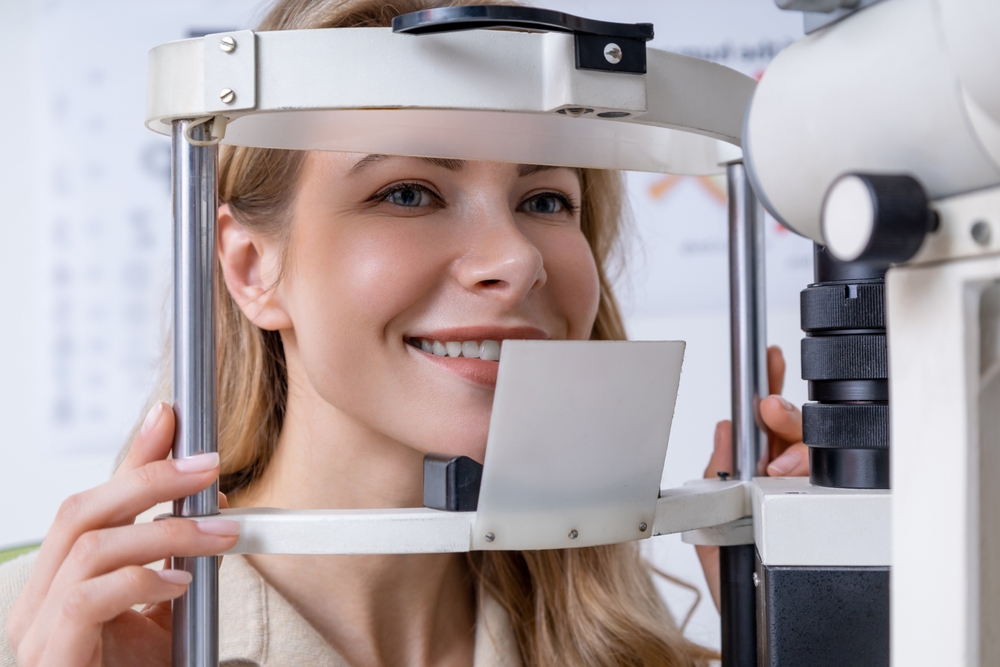
General guidelines suggest that good PRK candidates are 18 or older, have had a stable prescription for at least one year, have healthy corneas, and have a refractive error that falls within the treatable range. Realistic expectations are also a meaningful part of the candidacy process. PRK can significantly reduce dependence on glasses and contacts, but it may not eliminate that dependence for every patient.
A number of circumstances point toward PRK over LASIK specifically. Patients with thinner corneas, those with a history of dry eye, people in active or high-contact careers, and anyone whose corneal measurements fall outside the parameters for safe flap creation are often better served by PRK. Previous LASIK in the other eye or prior eye surgeries can also be factors your surgeon weighs when recommending a procedure.
These are general guidelines, not a substitute for a thorough evaluation. Determining whether PRK is appropriate for your specific situation requires a comprehensive exam that includes detailed corneal mapping, measurement of corneal thickness, and a full review of your prescription history and eye health. What qualifies one patient may not apply to another.
Ready to See What PRK Can Do for You?
For patients with astigmatism, PRK offers a well-supported, clinically proven path to clearer vision, with advantages that LASIK simply cannot provide for certain eyes. Whether the key factor is corneal thickness, a history of dry eye, an active lifestyle, or another consideration entirely, PRK has helped millions of patients reduce or eliminate their need for corrective lenses.
Schedule a consultation at Hayden Vision in Evansville, IN, today to find out if PRK is the right step toward clearer, more comfortable vision for you.